
Frequently Asked Questions
If your question is not here, send it with your enquiry — we would rather answer it before you place an order than after.
What information do you need to quote?
A drawing, a 3D file, or a photo of the worn part plus the pump make and model. If you only have the part, send it — reverse-engineering from a sample is normal work here, not an exception. We will tell you which dimensions we had to assume.
What is your minimum order quantity?
100 pieces. Twin vertical-line moulding is a batch process, and that is exactly where the consistency between the first casting and the hundredth comes from.
How long does a first order take?
It depends on whether tooling already exists for the part. Lead time is quoted per project after the interface review rather than published as a blanket figure.
Which parts of a pump do you actually cast?
Casings and volutes, bearing housings and brackets, seal glands and covers, and impellers. Shafts and wear rings are outside our range — those are machined parts, not castings, and we say so up front rather than taking the order and sub-contracting it.
What casting process do you run?
Sand casting on a twin vertical-line moulding system covered by a national patent. It is the one route we run. Investment casting and shell moulding are not in the plant.
Which materials can you pour?
Grey iron, ductile iron, WCB carbon steel and CF8M stainless cover most of what we make. Other grades are confirmed against your drawing before quoting.
Do you supply raw castings or machined parts?
Both. Tell us which faces matter and we machine them; otherwise the casting ships with machining allowance for you to finish.
What documentation ships with an order?
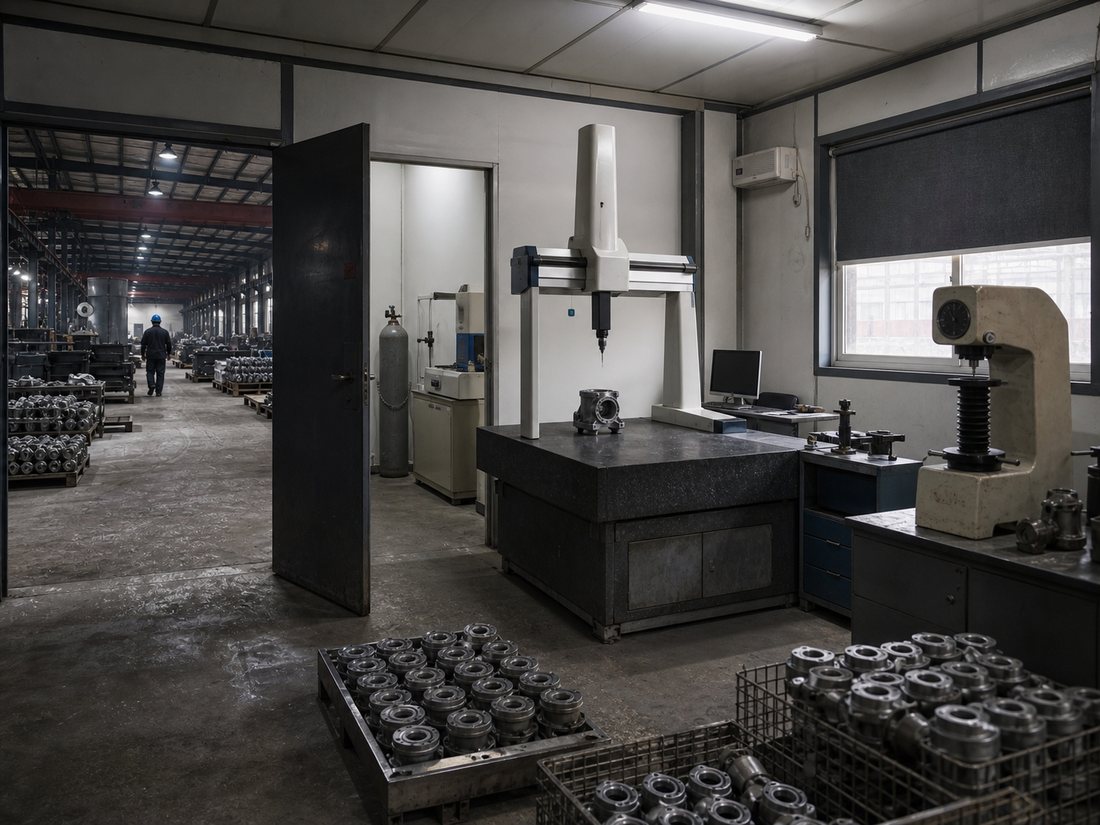
A material certificate to EN 10204 3.1 per heat, spectrometer results, and a dimensional report measured against the drawing you sent.
Can you work from a worn part with no drawing?
Yes, and it is most of what we do. We measure the interfaces directly and reconstruct the rest, because the surface you would otherwise measure is the eroded one.
How do you pack for export?
Parts are wrapped and nested in moulded pulp trays inside plywood export cases, strapped and stretch-wrapped on pallets, suitable for sea or air freight.
Send the Part, Not Just the Question
Most questions about fit are faster to answer from a photograph than from a description. A picture of the worn casting next to a tape measure tells us more than a paragraph.
- Drawing, 3D file, or photo of the worn part
- Pump make and model from the nameplate
- Pumped fluid, temperature and quantity