
Our Impeller Manufacturing Advantages
Hydraulic Profile Reproduced, Not Traced
Vane curvature, passage width and trailing-edge geometry set the duty point. We reconstruct them rather than copying the eroded outline of the worn part.
Balanced Before It Ships
Rotating parts are dynamically balanced, to the grade agreed on the order. An unbalanced impeller loads the bearings and the seal every single revolution.
Dense, Sound Castings
Gating and feeding designed for the section thickness, so the vane roots and shroud junction come out free of shrinkage porosity.
Alloys That Match the Service
CF8M for general water and chemical duty, CD4MCu where chlorides bite, bronze for seawater, 27% high-chrome where the fluid is abrasive.
Impeller Constructions We Cast
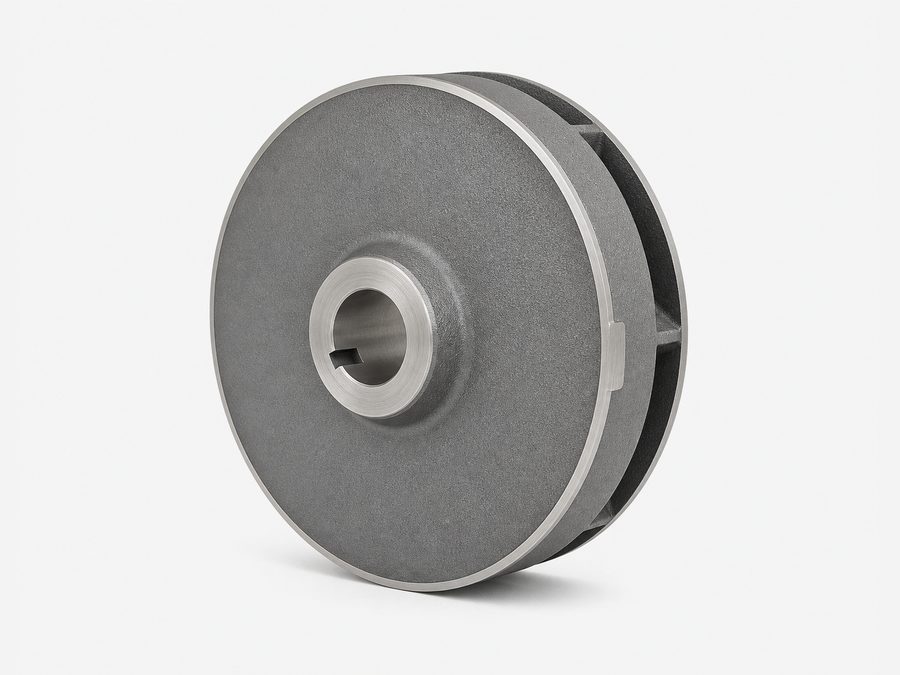
Closed Impeller
Shrouds both sides — highest efficiency, clearance held at replaceable wear rings.
Enquire ›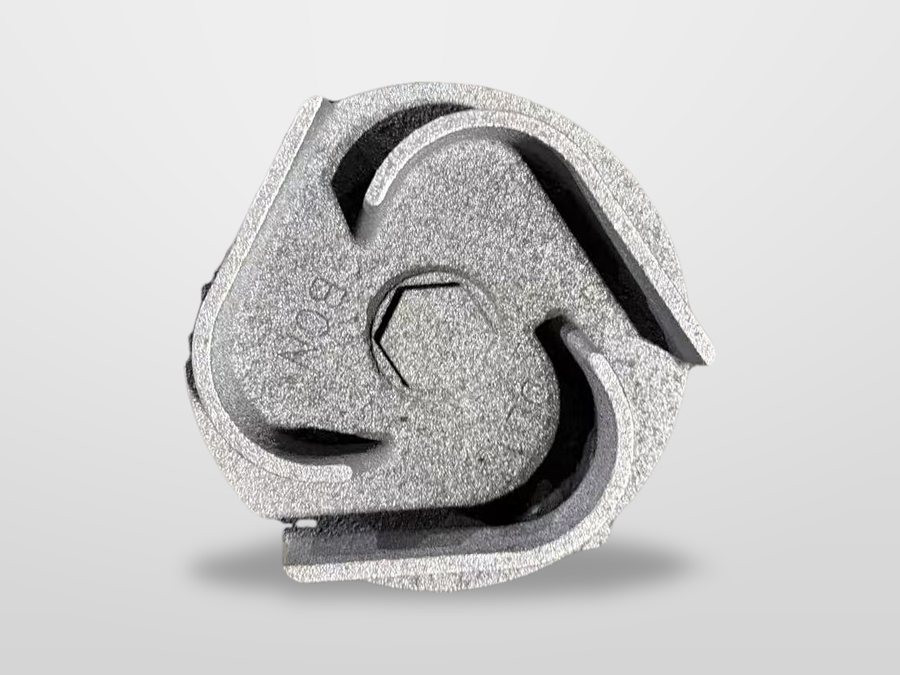
Semi-Open Impeller
Back shroud only — tolerates solids, clearance re-adjustable against the casing face.
Enquire ›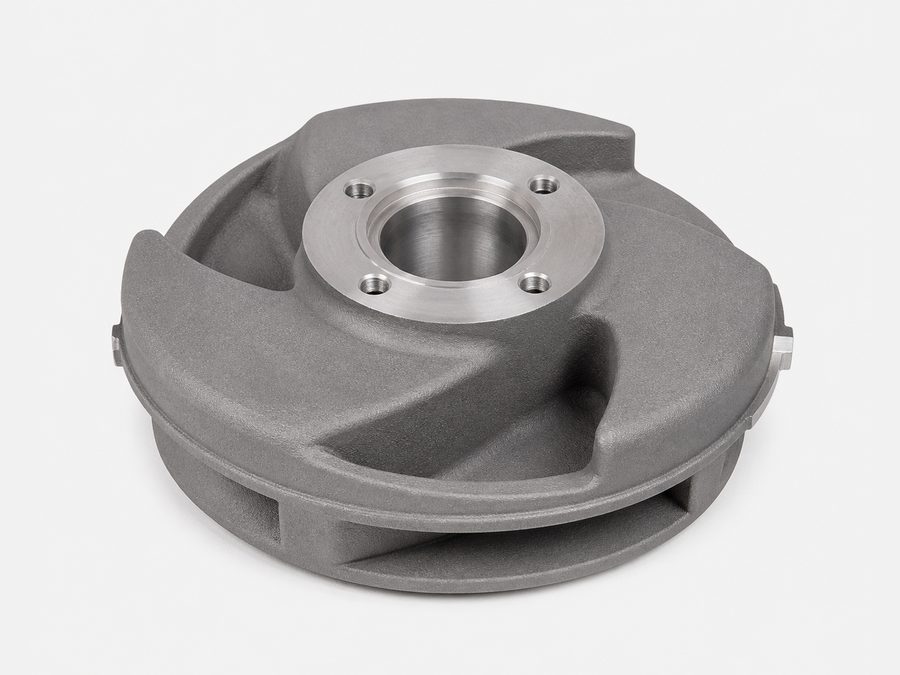
Slurry Impeller
Thick-section high-chrome, fewer vanes, generous passages — sacrificial by design.
Enquire ›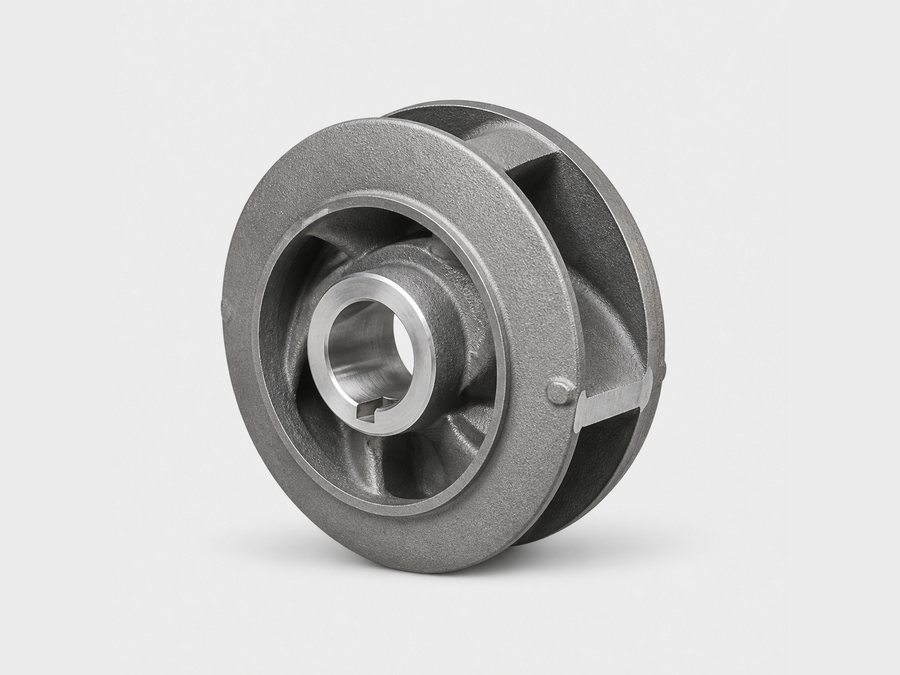
Double-Suction Impeller
Flow enters both sides, axial thrust largely balanced — for larger split-case units.
Enquire ›Custom Impeller Manufacturing Services
The impeller is the only component in a centrifugal pump that adds energy to the fluid. Everything else exists to hold it in place and stop what it produces from leaking back — which makes it the part most worth getting right.
- Reverse-engineering from worn samples
- Closed, semi-open, open, vortex and double-suction constructions
- Cast and machined together with the casing it runs in
- OD trimming to a specified duty point
How We Manufacture Your Impeller
Review the Input
Drawing, 3D file, sample or nameplate photo — we list what is dimensioned and what must be confirmed.
Confirm Interfaces
Bore, keyway, hub height, OD and rotation direction, settled against your part.
Cast
Twin vertical-line sand moulding; alloy verified by spectrometer on the heat.
Machine, Balance, Inspect
Vane and seat machining, dynamic balancing, dimensional report, then release.
Alloys for Impellers
| Alloy | EN / spec | Typical service |
|---|---|---|
| CF8M / 316SS | 1.4408 | General chemical duty, mild corrosives, water and wastewater |
| CD4MCu / CD4M | 1.4517 | Duplex — chloride and erosion resistance, seawater and slurry |
| CN7M / Alloy 20 | 2.4660 | Sulphuric acid and mixed acid service |
| WCB carbon steel | 1.0619 | Clean water, oils, general non-corrosive duty |
| Bronze C95800 / C90300 | — | Seawater, marine and fire pump components |
| High-chrome 27% Cr | A532 | Abrasive slurry, mine dewatering, ash handling |
FAQ: Engineering & Troubleshooting Impellers
Can you make an impeller if I only have the worn one?
Yes. The interfaces are measured directly; the vane profile is reconstructed, because the surface you would otherwise measure is the eroded one.
How do I know which alloy I need?
Tell us the pumped fluid, temperature and solids content. If the original is unknown, PMI on your sample identifies the alloy family and we quote from there.
Do you supply the matching wear rings?
No — wear rings are outside our range. We cast and machine the impeller, the casing it runs in and the seal gland; rings and shafts you source elsewhere.
What balance grade do you work to?
The grade is agreed per order against ISO 1940, and the achieved grade is stated on the report that ships with the part.
Can you trim an impeller to a different duty point?
Yes — trimming the OD is a normal way to move head and power. Tell us the target duty and we will state the resulting diameter on the quotation.
Learn More: Technical Insights on Impeller Performance
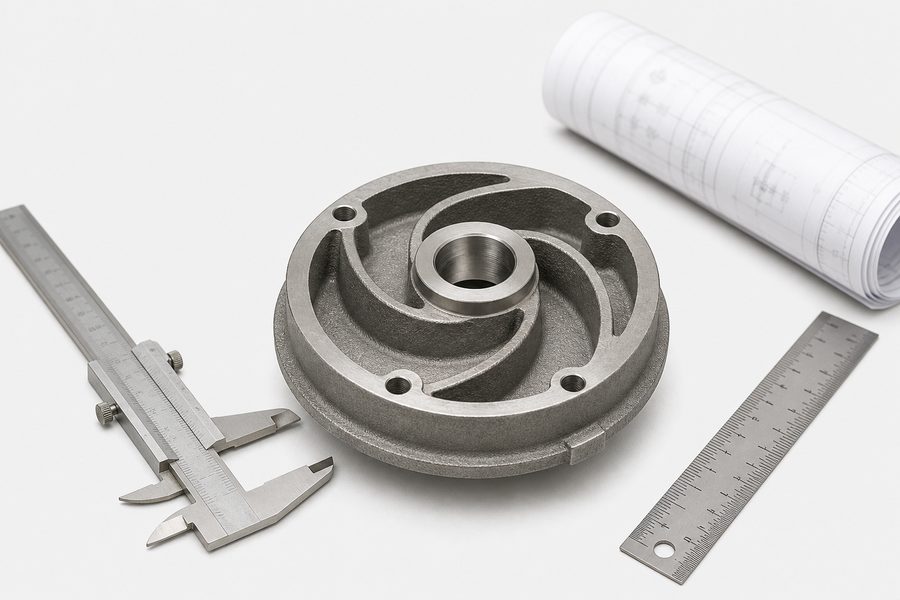
What Is a Pump Impeller?
The single component that converts shaft power into fluid energy — geometry, types and why the trailing edge matters.
Read more ›Closed vs Semi-Open Impellers: How to Choose
Efficiency, solids handling and clearance maintenance — the three trade-offs that decide the design.
CF8M or CD4MCu? Selecting Alloys for Pump Wet Ends
Chloride content, abrasion and cost drive alloy choice more than the pumped medium's name.
Why a Casting Fits or Does Not: The Interfaces That Decide
Flange face, bolt circle, spigot register and bore — the four dimensions that make a replacement casting drop in or go back in the crate.